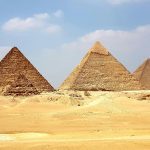
The destination aims to double international arrivals within the next few years
Egyptian tourism is on a roll, with the country seeing a growing number of arrivals at a time when many countries in the Middle East are seeing their tourist trades struggle because of regional tensions.
Egypt hosted 14.4 million international visitors in the first nine months of 2026, an increase of 4% compared to the same period last year, and is seeking to double international arrivals within the next few years as the country continues to invest in tourism infrastructure, expand aviation capacity and develop new destinations.
The announcement follows the Egyptian Tourism Authority’s participation in the recent 26th WTTC Global Summit in Malta, where Sherif Fathy, Egypt’s minister of tourism and antiquities, was presented with the WTTC Global Champion Award for Outstanding Leadership in Travel and Tourism, recognizing his leadership and the continued advancement of Egypt’s travel and tourism sector.
“I am honoured to receive this award, which is not only a recognition for me personally, but also a tribute to Egypt, its leadership, and the dedicated team working to achieve our national objectives for the tourism sector and to strengthen Egypt’s position on the global tourism map,” he said. “We are committed to supporting and empowering the private sector, both locally and internationally, as a key driver of sustainable growth. We are working toward a long-term vision with clear strategies and defined targets, focused on enhancing Egypt’s competitiveness as a tourism destination and offering diverse, authentic, and sustainable experiences that meet the expectations of travellers from around the world.”
Egypt’s tourism economy has grown rapidly in recent years, welcoming 19 million international visitors in 2025, with travel and tourism contributing $34.4 billion to the economy, according to WTTC. The country is targeting 30 million visitors annually by 2030, supported by continued investment in tourism and aviation infrastructure.
Egypt also plans to double its current hotel capacity of 240,000 rooms, with a development pipeline of approximately 35,000 hotel rooms, including growing investment in luxury properties, supporting this ambition. Airport expansion plans at Cairo International Airport, El-Alamein, Sphinx and Marsa Matrouh aim to accommodate increasing visitor numbers and improve access to destinations across the country.
Egypt’s range of destinations is also supporting the case for further tourism investment. The Red Sea and Mediterranean coasts, Nile Valley and Western Desert each offer a different reason to visit, while the Grand Egyptian Museum adds a major new draw to Cairo and the wider cultural offering. This breadth allows tourism growth to extend beyond established destinations, opening new areas for hotel and tourism development.
Meanwhile, several tour operators that offer Egypt agree that its tourism trade is riding high.
“Egypt is having a moment right now — and what makes it interesting is that the country is finally being seen for its full spectrum, not just its icons,” says Sally Mikhail of GMTours. “Egypt is performing exceptionally well in global tourism this year. Visitor numbers are climbing steadily, major infrastructure projects are coming online, and the country is positioning itself as a diversified destination rather than a single‑story ‘Pyramids and Nile’ experience. The 14.4 million visitors in the first nine months of 2026 show that demand is not only strong but expanding into new regions and new types of travel.
“A modern cultural anchor in Cairo with the Grand Egyptian Museum finally opening and Sphinx Airport easing access to Giza, travellers can experience antiquities without the old logistical friction. It’s a rare blend of ancient heritage and modern infrastructure.
A rising Mediterranean alternative – El‑Alamein and Marsa Matrouh – are transforming the North Coast into a luxury beach destination that competes with Greece or Turkey — but with a distinctly Egyptian identity.”
Mikhail adds that nature and wellness in remote landscapes is building a following, with the Western Desert, oases, and Red Sea coastlines “becoming havens for low‑impact travel, stargazing, desert wellness retreats, and biodiversity‑rich marine experiences.
“Egypt is no longer just ‘the place you go once to see the Pyramids.’ It’s becoming a multi‑trip destination with coastal escapes, desert adventures, cultural immersion, and luxury city breaks.
She adds that Egypt is proving popular for weddings, featuring a mix of luxury, scenery, culture, and convenience that couples didn’t associate with Egypt five years ago.
Destination weddings today are multi‑day experiences. Egypt offers built‑in pre‑ and post‑wedding activities, such as Nile cruises, diving and snorkeling, desert safaris, museum and heritage tours, Mikhail says
“It turns a wedding into a full travel experience for guests,” Mikhail continues. “Couples need an experience with beautiful scenery, great weather, amazing hospitality, amazing cuisine and a background with one of the wonders of the world, the Pyramids.
Renata Snidr of NARAT also reports that Egypt is seeing ongoing interest, interest she says would be greater if the Middle East tensions eased.
“NARAT is observing steady sales and continued desire from agencies for travel to travel to Egypt,” Snidr says. “Concern with the Middle East conflict of neighboring countries still contributes to consumer decision-making, when reserving travel to the destination. The resolution of the conflict would boost visitor arrivals, and the new developments lay the foundation to support increased visitor arrivals.”
Notably, she said that Egypt is a perennial tourism destination, encompassing the last of the seven ancient wonders of the world.
“Egypt’s Great Pyramids and other historic sites are magnificent and alluring today, as it was millennia back. The priority for Egypt’s government is ensuring that its infrastructure can support its anticipated future tourism arrival targets. The investments in increasing accommodation supply, improving infrastructure, and investments to develop new regions to spread visitor growth, avoiding congestion and overtourism, will no doubt benefit tour operators and travel agencies in the longer term.”
Meanwhile, Snidr says NARAT has as well been diversifying its Egypt tour product to provide alternative experiences, and navigate expected visitor increases in popular cities, especially during peak periods. These include overnights on the Red Sea with day visits to essential historic sites, such as the Giza Pyramids and Luxor, maintaining an enhanced experience for tour participants, without cultural compromises.
“Operating tours to Egypt for decades, NARAT is committed to ensuring our tours deliver memorable journeys,” Snidr adds.
Roopa Tuli of Delhi-based CaperLux – which includes Egypt in its program – said Egypt “isn’t affected at all” by conflicts in other parts of the Middle East. “Egypt has remained quiet.”
Tuli said her company gets daily updates on Egypt and praised its many archeological sites.
“If you’re an archeology enthusiast you’ll be in seventh heaven,” she says of Egypt vacations.