JENNIFER MERRICK
Sri Lanka’s wide variety of attractions and landscapes within a small geographical region is one of its biggest draws and what keeps visitors coming back… or even staying. Arthur C Clark, a renowned British science fiction author, was so enamoured by the country that he made it his home for 52 years.
“The island of Sri Lanka is a small universe,” he once wrote. “It contains as many variations of culture, scenery and climate as some countries a dozen times its size.”
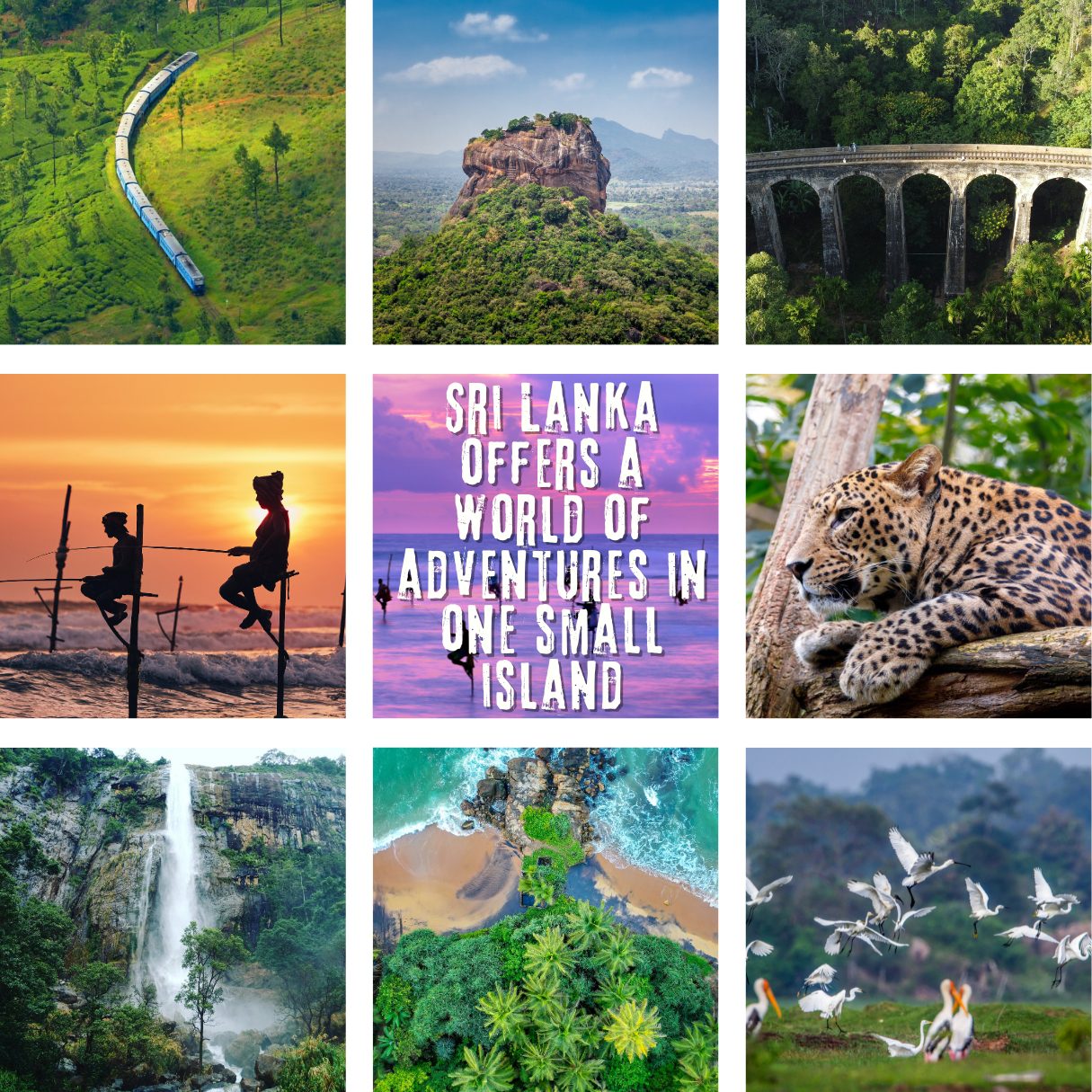
Though only roughly the size of Ireland, the island somehow fits misty mountains, white-sand beaches, ancient monuments, safari wilderness parks and countless emerald tea plantations. This is good news for tourists who have been coming in increasing numbers (over two million visitors annually, a 38 per cent increase from 2023).
“Visitors can cover multiple experiences in a short period of time,” said Thanushka Nanayakkara, CEO of Prestige Discoveries. And it’s one of the reasons he believes the destination is on the cusp of becoming the next ‘it’ destination, a sentiment supported by recent accolades from Lonely Planet and the Pacific Asia Travel Association.
Sri Lanka is particularly appealing for travellers looking for more immersive experiences, he added, citing all the wildlife and cultural attractions that range from surfing and wildlife safaris to visiting the place of Buddha’s enlightenment and ancient ruins of advanced civilizations. “In other places like Africa, for example, you have to travel much further to get those different experiences,” says Thanushka.
After a recent fam visit to Sri Lanka with Whittall’s Travels, participants agreed that its remarkable diversity is a big reason why they’ll be encouraging more of their clients to visit.
“Sri Lanka truly offers something for everyone from incredible cuisine and mountain adventures to temples, game parks and stunning beaches,” said Minaz Thaver of Gala Travels. She added that all this was complemented by the warmth of its citizens.
Not only did each location on our itinerary seem like its own destination, but the accommodations we stayed in also mirrored the character of each region.
Capital Beginnings
Our introduction to Sri Lanka began in its capital, Colombo, at Cinnamon Life at City of Dreams, the most ambitious hotel and entertainment complex the city has ever seen. Newly opened, this 1.3-billion-dollar investment on the shores of the Indian Ocean featured a large convention centre, grand ballrooms, numerous restaurants and 800 spacious and modern rooms.
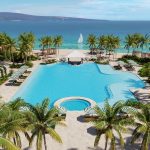
Original Sri Lankan paintings lined the corridors, and a dedicated gallery allows guests to purchase works with 100% of the proceeds going to the artists. Live music played in the Gatz, a two-level champagne and cocktail bar inspired by The Great Gatsby, and an infinity swimming pool on the rooftop offered a glitzy hangout with a view.
The new resort was the ideal base to explore more of the city, including the lively Pettah Market, where we quenched our thirst with Sri Lanka’s distinct, reddish-coloured King Coconuts, and wandered its narrow streets. At the Lotus Tower, Colombo’s CN Tower, we took in the sweeping views of the rapidly changing metropolis.
Sigiriya and the Cultural Triangle
The drive from Colombo to Habarana took four hours, but we felt as though we’d arrived in a completely different world. Here, in the heart of Sri Lanka’s famed cultural triangle, were five UNESCO World Heritage Sites, showcasing a remarkable ancient civilization and a rich Buddhist heritage. This fascinating history was set among the lush scenery of reservoirs and jungle that was home to an abundance of wildlife, including curious monkeys who greeted us everywhere we went.
Our accommodation here was also a world away from the glitzy glamour of the Cinnamon Life of Dreams. Heritance Kandalama not only blended in with the extraordinary landscape, but it was also part of it. This was very much the intention of renowned Sri Lankan architect, Geoffrey Bawa, whose goal was to create a ‘jungle palace’, where guests could immerse themselves in the sights, sounds and fragrances of its surroundings. Features like an infinity pool that appeared to spill into the lake below and rock walls inside the hotel gave a sense of luxuriating in nature. The private balconies that looked out onto the lake and lush forested surroundings drew visits from monkeys who peered into the rooms.
From our jungle palace, we visited some of Sri Lanka’s greatest cultural treasures, including its star attraction, Sigiriya Lion Rock. The 5th-century royal citadel rose dramatically from the ground and perched on top of a massive rock formation. Climbing up the 1,200 stairs revealed new discoveries every step of the way, from the ingenious engineering designs of the ancient water gardens, complete with fountains, to the giant stone lion’s paws and the frescoes that adorned the mirror wall.
Other stellar sights in the region included Anuradhapura, one of the country’s oldest sacred cities, and Dambulla Cave Temple, ancient cave shrines filled with murals and statues.
Kandy: The Sacred City of the Hills
From Sigiriya, we traveled 2.5 hours to continue our golden triangle exploration with a visit to Kandy, Sri Lanka’s former royal capital. Up in the hills, at 1600 feet above sea level, the country’s second most populous city offered a bounty of rich attractions.
The Mahaweli River runs through the city and our accommodation at the Cinnamon Citadel Kandy made the most of its riverside location. The four-star property with its large swimming pool and landscaped grounds, felt like a secluded retreat despite its central location in the heart of the city. When we arrived, we were invited to light incense to honour the spirituality of its location.
All of their 115 rooms had balconies overlooking the river or the jungle hills. From this tranquil base, we explored Kandy’s rich heritage. The Temple of the Tooth Relic shone as the city’s crown jewel, housing its namesake artifact, Buddha’s left canine tooth. We joined the pilgrims who came to receive blessings and make offerings of lotus flowers. We were struck by the intricate details of the shrines, the murals, which told the temple’s stories, and the reverence that permeated the site.
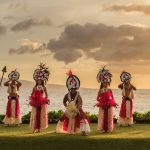
Just outside the city limits sat the 60-hectare Royal Botanical Gardens. Our day slowed down as we strolled along the paths through the fragrant, colourful gardens and trees from around the world. At the Giragama Tea Factory, one of the oldest tea estates in the region, we enjoyed a tasty and interactive introduction to Sri Lanka’s 150-year-old tea tradition. Like the tea, gemstones are internationally recognized as some of the best in the world and we were dazzled at the displays at E.W. Balasuriya Jewellers (EWB). Equally eye-catching were the acrobatic feats at the cultural show at the Kandy Lake House just next door.
Nuwara Eliya: A Cool Hillside Retreat
Nicknamed ‘Little England’, this high-altitude town really does look like it’s been plucked out of the UK with its half-timbered houses, pubs and colonial architecture. Like many visitors, we arrived via train, travelling along one of Sri Lanka’s historic railway lines dating back to the colonial era. The journey from Kandy to Nuwara Eliya is considered one of the most scenic in the world, passing through lush countryside, tea plantations, waterfalls and villages.
In this cool town, with temperatures 10 degrees lower than the coast, we stayed at the Golden Ridge Hotel, a luxury five-star resort, which nails the details with beautifully designed, spacious rooms with all modern comforts and mountain views. The property grounds are spread out on an over a six-acre ridge with multiple scenic spots to chillax and enjoy the views, including the stunning indoor pool with floor-to-ceiling windows.
A Wildlife Safari at Yala National Park
Our tour of Sri Lanka ended on a high note with a wildlife safari in Yala National Park, the most visited wilderness park in the country, covering nearly 400 square miles of protected land. The terrain includes forests, grasslands and lagoons, which support one of the highest leopard densities in the world and an impressive variety of other wildlife.
On our game drive, armed with binoculars and a sharp-eyed guide, we spotted a steady parade of wildlife, from water buffalo wallowing in the mud and mongooses weaving through the underbrush to colourful tropical birds like parakeets and bee-eaters perching in the trees, and, most memorably, a leopardess sauntering up a rocky outcrop, every inch the queen of the wild.
Our accommodation at the Jetwing Jungle Lodge, located at the edge of the park, was an integral part of our wildlife experience. Each of the ten bungalows has a large wooden patio, where you can enjoy the outdoors and see the wildlife. We delighted in watching a family of langur monkeys, a more reclusive species, leaping through the grasses in front of our eyes.
On our final evening in Sri Lanka, we enjoyed a delicious al fresco dinner at the base camp with the sounds of the jungle as background music. We marvelled at what we’d seen and done in our all-too-short time in the country. It seemed unbelievable that in seven days, with no flights and no drives longer than 4.5 hours, we had seen such a diverse range of attractions and that each stay felt like a completely different destination. And we hadn’t even got to its famous beaches and surf towns like Arugam Bay, Hiriketiya, Weligama and Galle. But this just means we’ll have to come back.
Getting to Sri Lanka
There are currently no direct flights from Canada, and the total travel time is a minimum of 21 hours. We connected through London Heathrow, where we flew with Sri Lankan Airlines and enjoyed their roomy economy seats and excellent service.
Visitors must obtain a visa, which can be arranged online in advance or issued upon arrival with relative ease.