The Spanish city of Valencia is thankful for new nonstop lift from Canada, which is making the Mediterranean-fronting destination more attractive for people in this country. Air Transat’s Montreal-Valencia route shortens travel times to a part of the world that has traditionally been overshadowed by some other Spanish destinations but is now gaining attention.
The service is currently seasonal, operating from February to October, but tourism authorities hope it will become year-round.
“The launch of Air Transat’s Montreal–Valencia route is extremely positive for the city and represents a strategic milestone in strengthening Valencia’s position in the North American market,” says Paula Llobet, president of the Visit Valencia Foundation. “A direct connection significantly increases visibility in Canada and, by extension, in the United States, positioning Valencia more prominently within long-haul travel planning and distribution channels.”
Beyond the point-to-point traffic from Montreal, Llobet shared that the route facilitates onward connections from other Canadian cities, expanding Valencia’s potential catchment area.
“It opens the door to new visitor segments, strengthens cultural and economic ties, and reinforces Valencia’s international profile as a Mediterranean destination ready to compete in the long-haul market,” she says. “As awareness and demand grow in the Canadian and broader North American markets, the goal is to strengthen Valencia’s position as a year-round Mediterranean destination, supported by its mild climate, cultural agenda, gastronomy and quality of life.”
The Air Transat route is now the only direct one connecting Valencia and Canada, which Llobet says makes it particularly significant. Previously, Canadian travellers have typically accessed Valencia via such major European hubs as Madrid, Barcelona, Paris and Amsterdam.
“A nonstop service simplifies the journey considerably and enhances the destination’s competitiveness,” Llobet adds. “At the same time, Valencia benefits from excellent connectivity through Spain’s and Europe’s extensive air and rail networks. The city is very well linked to major European capitals and intercontinental gateways, allowing for smooth connections. The objective moving forward is clear: to continue expanding Valencia’s portfolio of international routes and consolidating its presence in long-haul markets.”
Valencia traditionally has had a lower profile in this country than some other Spanish cities, something Llobet states is changing, in part given its greater accessibility to Canadians.
“It is true that, for long-haul markets, Valencia may appear less prominent than cities such as Madrid or Barcelona, which enjoy greater international recognition,” she continues. “However, let me say this is changing. The 2025 report ‘Portrait of American & Canadian International Travellers’, by MMGY Globaland, ranks Valencia among the top three most desirable destinations in Spain for Canadian and American travellers.”
In the domestic Spanish market and across Europe, she said Valencia is already a well-established and priority destination.
“The city attracts 2.4 million visitors every year, and its diverse offers – cultural, historical, religious, gastronomic, architectural and popular – makes it one of the most complete urban destinations in Spain and Southern Europe. In addition, its climate is a major asset, especially for travellers from colder latitudes. Valencia enjoys mild winters with average temperatures around 10 to 17 °C and around 300 days of sunshine per year,” she shares. “The challenge now is to show Canadian and long-haul travellers that these attributes perfectly match what they seek when traveling to Europe – history, culture, gastronomy, beauty, quality of life and a Mediterranean ‘art de vivre’ that captivates visitors on every stay.”
Beyond that, she shares that one of Spain’s most iconic gastronomic ambassadors, paella, originates in Valencia and remains a key element of the city’s brand.
“This connection is widely recognized in Spain and Europe and sets Valencia as the Pantry of the Mediterranean,” she adds.
Llobet adds that Valencia offers some of the best urban beaches in Spain and, by extension, in Europe. The city beaches of Malvarrosa and Cabanyal have been awarded the Blue Flag for at least 10 years, an international certification that recognizes excellence in water quality, safety, services and environmental management.
South of the city, El Saler and La Garrofera beaches, located within the Albufera Natural Park, have held Blue Flag status for decades and represent a benchmark for sustainable tourism in a highly valuable protected natural environment.
“In addition, the province of Valencia features a wide range of coastal destinations with their own identity, such as Cullera, Gandía, Oliva, Canet d’en Berenguer and Sagunto, combining high-quality beaches with heritage, gastronomy and cultural offerings,” Llobet reports.
Notably, she says its diversity makes the Valencian community one of Europe’s leading sun-and-beach regions and a reference destination for different traveller profiles.
“Valencia offers a compact Mediterranean lifestyle destination with world-class culture, gastronomy and beaches within minutes of the city center.”
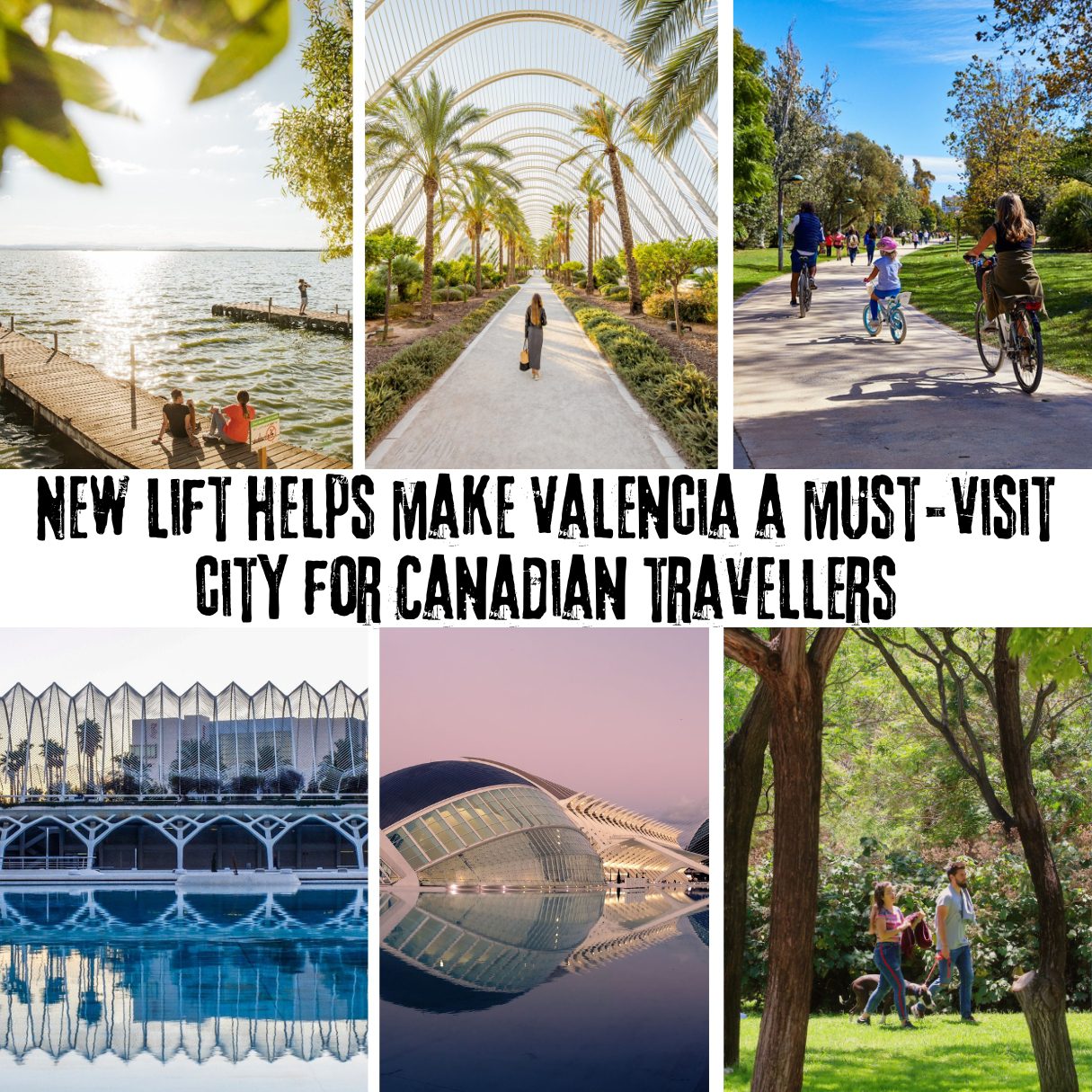
She adds that Valencia is an excellent gateway to a wide variety of attractions, both within the city and across the surrounding region. In the city itself, highlights include the City of Arts and Sciences, the historic old town with the Cathedral (home for the Holy Grail Catholic relic), and the Silk Exchange (a UNESCO World Heritage Site), the Central Market, the former Turia riverbed, which was transformed into a – mile urban park, and the Albufera Natural Reserve, one of the most important wetlands in the Mediterranean.
The province of Valencia is home to such destinations such as Sagunto, which has a Roman theatre and castle; Xàtiva, known for its impressive hilltop castle and historic center; Requena and Utiel, key wine tourism areas; and Gandía, with its Borja heritage and cultural and beach offerings.”
“The wider Valencian Community offers further diversity in neighboring provinces. In Castellón, destinations such as Peñíscola, with its seafront Templar castle, the medieval walled city of Morella, and natural areas like the Desert de les Palmes or the Costa del Azahar stand out,” Llobet reports. “In Alicante, cities and towns such as Alicante city, Benidorm, Altea and Elche – home to the UNESCO-listed Palm Grove – along with natural parks such as Montgó and the La Mata–Torrevieja lagoons, broaden the cultural, natural and leisure offer.”
Llobet adds that travel within Spain is easy, thanks to its high-capacity roads, high-speed rail, international airports and cruise ports, making it easy for visitors to travel within the region and across the Mediterranean and Europe. Valencia Airport is 10 km away from the city, and continues to grow in passenger traffic and international connections every year, reinforcing the city’s accessibility and its role as a strategic gateway to the Mediterranean.