ANN RUPPENSTEIN
Standing under a sky full of stars on the site where Pluto was first discovered in Flagstaff, Arizona back in 1930, the Milky Way already shines for the naked eye to see. But gazing through one of the six high-powered telescopes at Lowell Observatory truly brings the night sky to life because celestial wonders like craters on the moon, a glimpse of the Andromeda Galaxy some 2.5 million light-years away and distinct images of Saturn and its prominent rings are all possible for visitors to behold.
“Arizona is really the birthplace of the dark sky movement,” Alix Skelpsa Ridgway, Director, Arizona Office of Tourism, tells Travel Courier. “Pluto was discovered here (at Lowell Observatory), and the state is home to the world’s first Dark Sky City, Flagstaff. On a clear night, a quick gaze upwards reveals a multitude of celestial objects including Mercury, Mars, Jupiter, thousands of stars and even the Andromeda galaxy.”
Research Scientist Brian Skiff, who has spent the last 50 years at Lowell Observatory and was the final person to use the Pluto Discovery Telescope, also made many asteroid and comet discoveries, including ones he named after members of the Beatles.
“With this instrument I’m credited with about 50 objects,” Skiff, who took the final photographic plates with the Pluto Discovery Telescope before its retirement, said standing next to the telescope. “I also participated in a big survey that we ran with a different instrument and we found about 30,000 asteroids. There were nights at that modern wide-field camera with a digital detector, where we would find 4,000 or 5,000 new asteroids on a single night.”
Images courtesy of Lowell Observatory + Massey/Neugent/Levine/Lowell Obs./NSF
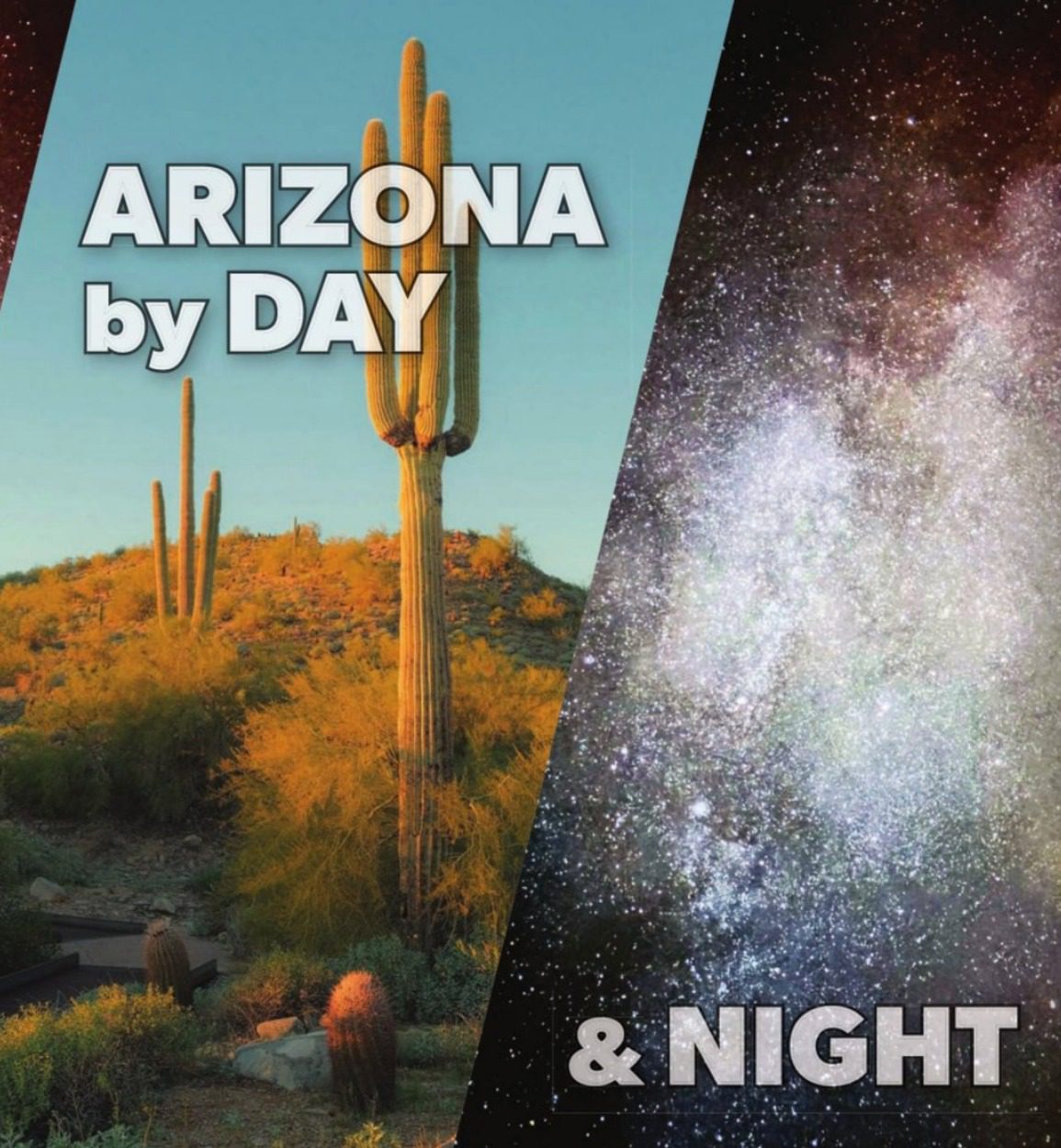
While Arizona’s dramatic landscapes like the Grand Canyon, Antelope Canyon, Horseshoe Bend and the red rocks of Sedona are some of the top draws that continue to attract visitors from around the world, a trip to the state quickly makes travellers realize that sometimes the best sights to see transcend beyond the day, to night. Welcome to Arizona after dark.
“Daylight reveals Arizona’s landscapes, but nightfall unlocks a completely different world: some of the clearest and darkest skies on the continent,” adds Skelpsa Ridgway. “Dark sky tourism in Arizona has grown from a specialized niche into a mainstream travel trend. While stargazing was once the realm of amateur astronomers and campers, it now reaches a broader cross section of consumers. Hotels and luxury resorts host guided stargazing nights, glamping properties feature clear-roof domes and regional itineraries like southern Arizona’s Astro Trail make astro-tourism accessible to everyday travellers.”
Falling for Flagstaff
Designated as the world’s first International Dark Sky City in 2001 but known for protecting the night sky since 1958, Flagstaff is a must visit for dark sky enthusiasts.
“Ten years ago a study found that 80 percent of North Americans, including Canadians, cannot see the Milky Way where they live,” shared Dr. Danielle Adams, Executive Director of the Flagstaff Dark Skies Coalition. “You need about 1,000 stars to see the Milky Way and we use that as a common sense measure. If you can see the Milky Way, you have enough stars to be inspired.”
Images courtesy of Kirk D’Souza + Marie Miller
The destination aims to lead by example and show other cities how it’s possible to become a Dark Sky destination because light pollution can be fixed immediately, even in cities.
“We’ve done the modelling that if the rest of the continent followed Flagstaff’s model, at least 80% could see the Milky Way even in the middle of cities — Phoenix would have 1,100 stars and a faint view of the Milky Way if they followed Flagstaff,” Adams shared. “Those who live under dark skies — not a quick visit — but live, are more likely to wonder about the universe. And wonder, then curiosity, creativity, those things we want in our kids growing up.”
Especially coming out of the pandemic, Adams states that dark sky tourism has had a humungous impact on tourism.
“Astrotourism has been growing like crazy and especially over the last 10 years and in COVID it really grew because being outside looking at the stars was safe,” Adams said. “It doesn’t matter if you can’t afford to travel to a national park or how big your house is — everyone gets to be inspired by the night sky.”
Arizona’s appeal
Another part of Arizona’s appeal is that travellers can experience vastly different landscapes and seasons in one day.
“Arizona’s geography offers a rare opportunity for travellers to lounge poolside surrounded by giant saguaro cactuses in the Sonoran Desert, then drive two hours north to ski snowy mountain peaks that very same afternoon,” Skelpsa Ridgway notes. “Blessed with 330 days of annual sunshine, the state pairs endless outdoor adventure with high-end wellness retreats, world-class modern art, rich Native American culture and historic places.”
For clients planning to drive, build in extra time for scenic photo spots along the route. Stops like the Wilson Canyon Trail and the Oak Creek Canyon viewpoint within the Coconino National Forest are highlights along the way.
HIT THE OPEN ROAD IN ARIZONA
Spectacular Sedona
For nature lovers and outdoor enthusiasts, Sedona is another showstopper. It’s easy to see why the destination has been featured in films like Angel and the Badman with John Wayne, Stay Away, Joe, with Elvis Presley and even Alfred Hitchcock’s Psycho.
“There’s a lot to see in Arizona. Sedona is a mountain destination, it’s for people who want to get outside and enjoy nature,” noted Adam Hall, Destination Development Coordinator for the City of Sedona, adding that its wellness offerings extend far beyond yoga and spa services to sound healing and breath work, shamanic drumming and past-life regression. “There are so many great spots around town to take advantage of stargazing and one of them is right here at the Airport Scenic Overlook. It’s a really great add-on for people who come here that they don’t really expect.”
To see the area from another vantage point, head out on a tour with Arizona Safari Jeep Tours, which range in thrills from mild to wild, but all are guaranteed to be scenic.
Step back in time in Winslow
Winslow remains a key Route 66 stop for road trippers and motorcyclists, and offers a glimpse into its past as an important destination for railroad travellers. The city makes for a great home-base to discover attractions like the Meteor Crater Natural Landmark, the world’s best-preserved meteorite impact site. Fans of The Eagles will want to visit Standin’ On a Corner Park, a public roadside attraction that commemorates the famous 1972 Eagles hit song Take It Easy.
“As Route 66 celebrates its centennial in 2026, Arizona stands out as the ultimate Mother Road destination,” said Skelpsa Ridgway. “The state is home to 385 total miles of Route 66, which includes the longest continuous preserved stretch of original highway in the country, spanning from Lupton to west of Kingman.”
For a notable and historic way to stay, clients can check into La Posada, known as the final and grandest ‘railroad resort’ built by the Fred Harvey Company and the Santa Fe Railway. The property has had many notable guests from Albert Einstein, Amelia Earhart and Shirley Temple to more recent guests like Emilio Estevez.
Another highlight is Homolovi State Park, which frequently features guest speakers, as well as the Winslow Homolovi Observatory’s Moore Telescope, the only permanent observatory in Arizona’s state park system. Hiking trails will also take visitors around archaeological sites and petroglyphs of the Hopi ancestors that lived in the region until AD 1400.
Nature awaits in Fountain Hills/Scottsdale
With a convenient location within a short driving distance to Phoenix Sky Harbor International Airport, ADERO Scottsdale provides a great starting point for an adventure in Arizona. Along with astro-inspired drinks, such as the Dark Sky cocktail, the only Autograph Collection resort in a certified Dark Sky community offers stargazing opportunities for guests to discover through and app or via events put on by The Star Dudes, who share their expertise about constellations, planets and galaxies.
“Scottsdale offers exceptional stargazing opportunities just outside Phoenix, the fifth largest city in the United States,” added Experience Scottsdale’s VP of Communications, Laura McMurchie. “Low light pollution and dark-sky locations provide opportunities to see meteor showers, nebulae and even the occasional comet. With around 330 sunny days a year, very little rainfall and low humidity, the region offers clear skies and excellent viewing conditions year-round. For the best experience, visitors should plan a visit around the new moon, when darker skies make the stars even more spectacular.”
Images courtesy of Experience Scottsdale